Featured
Table of Contents
It's essentially the "I" or your feeling of personal identification. Your conscious thinking and understanding of the world around you. Experiences you purposely remember. Feelings you're proactively experiencing and processing. It preserves a coherent feeling of self as you engage with your environment, giving you recognition of just how you match the globe and helping you maintain your personal story concerning on your own over time.
They can likewise declare or neutral elements of experience that have actually merely befalled of aware awareness. Carl Jung's individual subconscious is necessary due to the fact that it substantially forms your thoughts, feelings, and behaviors, although you're normally not aware of its influence. Becoming aware of its materials allows you to live more authentically, heal old wounds, and grow psychologically and psychologically.
A neglected childhood being rejected might create unusual anxiousness in social circumstances as an adult. Complicateds are psychologically billed patterns developed by previous experiences.
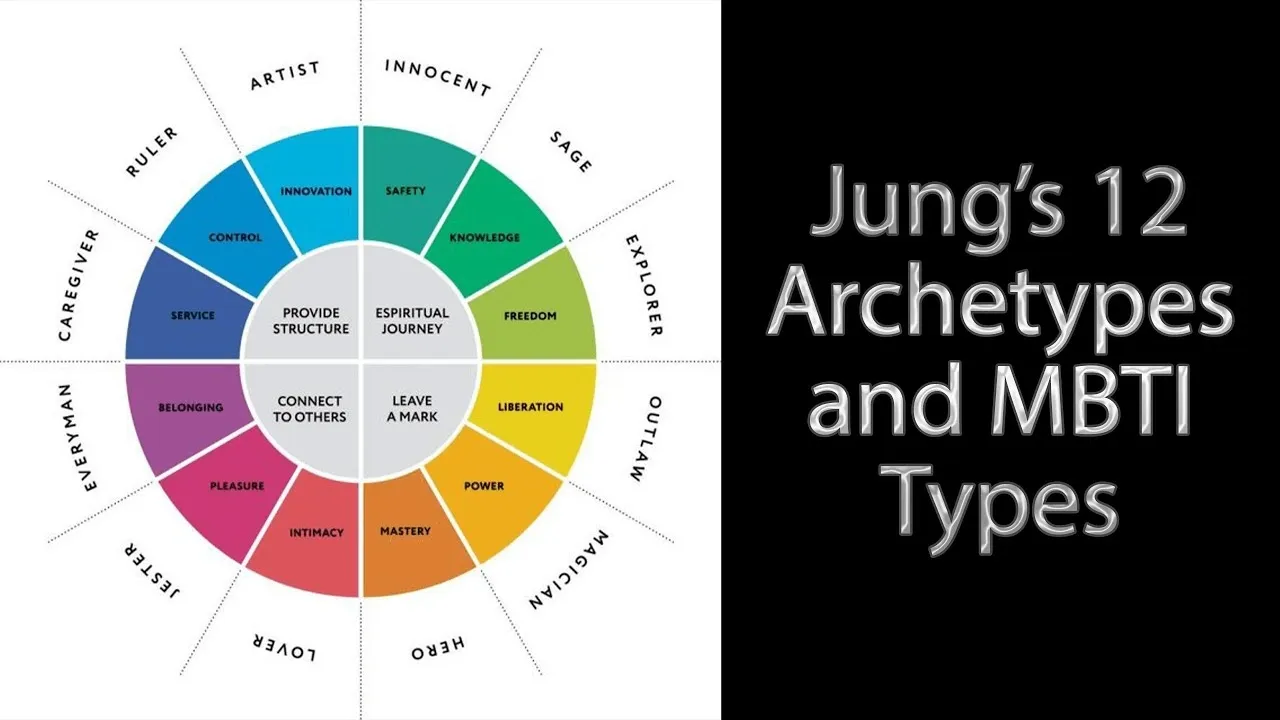
Typical examples consist of the Hero (the brave lead character who gets rid of obstacles), the Mom (the nurturing protector), the Wise Old Male (the mentor number), and the Darkness (the concealed, darker aspects of personality). We experience these archetypal patterns throughout human expression in ancient misconceptions, spiritual messages, literary works, art, fantasizes, and contemporary storytelling.
Training for EMDR Treatment Practitioners
This aspect of the archetype, the totally biological one, is the correct worry of scientific psychology'. Jung (1947) thinks icons from different societies are frequently very similar because they have actually arised from archetypes shared by the whole human race which belong to our cumulative subconscious. For Jung, our primitive past comes to be the basis of the human psyche, directing and affecting present behavior.

Jung labeled these archetypes the Self, the Character, the Shadow and the Anima/Animus. It conceals our genuine self and Jung explains it as the "conformity" archetype.
The term originates from the Greek word for the masks that old actors made use of, symbolizing the roles we play in public. You could think about the Personality as the 'public relationships depictive' of our vanity, or the product packaging that presents our ego to the outdoors. A well-adapted Persona can significantly add to our social success, as it mirrors our true characteristic and adapts to different social contexts.
An instance would certainly be an instructor that constantly treats everyone as if they were their pupils, or someone who is extremely authoritative outside their workplace. While this can be irritating for others, it's more troublesome for the specific as it can cause an insufficient understanding of their full individuality.
Cognitive Methods to Trauma Recovery
This generally leads to the Character including the more socially acceptable characteristics, while the much less preferable ones come to be part of the Shadow, one more necessary part of Jung's personality theory. An additional archetype is the anima/animus. The "anima/animus" is the mirror photo of our biological sex, that is, the subconscious feminine side in males and the masculine tendencies in ladies.
For example, the sensation of "love at initial sight" can be explained as a male projecting his Anima onto a lady (or vice versa), which brings about an instant and intense destination. Jung acknowledged that so-called "masculine" attributes (like autonomy, separateness, and aggression) and "feminine" characteristics (like nurturance, relatedness, and empathy) were not restricted to one sex or remarkable to the other.
Trauma Therapy in Auburn, CA for Healthcare Workers
This is the animal side of our character (like the id in Freud). It is the source of both our creative and destructive energies. According to evolutionary concept, it may be that Jung's archetypes show tendencies that as soon as had survival worth. The Darkness isn't just adverse; it gives deepness and balance to our character, showing the principle that every aspect of one's personality has a compensatory equivalent.
Overemphasis on the Character, while disregarding the Darkness, can lead to a surface individuality, preoccupied with others' understandings. Darkness aspects typically show up when we predict done not like characteristics onto others, functioning as mirrors to our disowned aspects. Engaging with our Shadow can be tough, yet it's essential for a balanced individuality.
Treating Compassion Fatigue-Related Trauma
This interplay of the Personality and the Shadow is typically discovered in literary works, such as in "Dr. Jekyll and Mr. Hyde", where characters face their twin natures, even more showing the compelling nature of this aspect of Jung's theory. There is the self which offers a feeling of unity in experience.
That was absolutely Jung's idea and in his publication "The Obscure Self" he argued that several of the problems of modern life are brought on by "man's dynamic alienation from his natural structure." One aspect of this is his views on the importance of the anima and the animus. Jung says that these archetypes are items of the cumulative experience of males and females living with each other.
For Jung, the outcome was that the complete psychological growth both sexes was weakened. Along with the prevailing patriarchal society of Western human being, this has actually led to the decrease of feminine top qualities entirely, and the control of the character (the mask) has elevated insincerity to a means of life which goes unquestioned by millions in their day-to-day life.
Each of these cognitive features can be revealed mostly in an introverted or extroverted form. Allow's dig deeper:: This duality has to do with how people make decisions.' Thinking' people make choices based on reasoning and unbiased factors to consider, while 'Really feeling' individuals make choices based upon subjective and personal values.: This dichotomy concerns how individuals view or gather details.

Latest Posts
Possibility and Healing from Disordered Eating
The Patient's Route toward Wholeness with Trauma-Informed Practice
Advantages of Trauma-Aware Practice for All Ages